- Botswana, Namibia, Angola and South Africa neglect indigenous citizens
- Communities could hardly access health care
- Lockdowns in Botswana deepened economic woes
- MOH insists every citizen has received quality health care
KABO RAMASIA
editors@thepatriot.co.bw
Advancing Rights in Southern Africa (ARISA) has pointed out Botswana and three other Southern African countries including Angola, Namibia and South Africa, for neglecting the socio economic, wellbeing and rights of its indigenous citizens since the advent of the COVID-19 pandemic.
This painful story of neglect amidst a ravaging COVID-19 was captured by ARISA in a report following its assessment conducted at the height of the pandemic in the year 2020. According to ARISA, in all these four countries, indigenous people had challenges accessing health care, information, adequate assistance and interventions as well as an overall threat to their livelihoods and food security during the crisis.
ARISA noted that in Botswana, for instance, a place like Maun which is frequented by tourists posed a COVID-19 threat to the indigenous communities in that area which necessitated the government of Botswana to lock it down to avoid the spread of the virus and endangering the said communities.
According to ARISA, the spread of the marauding virus worsened the already existing challenges of indigenous people’s access to health care.
“The United Nations (UN) has similarly noted that COVID-19 poses a grave health threat to indigenous peoples around the world,” said the report. “Due to the remoteness of their settlements, indigenous communities already experience poor access to healthcare, significantly higher rates of communicable and non-communicable diseases, lack of access to essential services, sanitation, and other key preventive essentials, such as clean water, soap and disinfectants.”
Still, the report further highlighted that government’s inability to provide health messaging in indigenous languages across these four countries resulted in difficulties in access to information, as a result, the report stated that indigenous communities were left vulnerable and more exposed to the disease.
ARISA has further noted that indigenous communities cultural lifestyle’s exposed them even more to the virus. This is because they believe in traditional gatherings which is a key aspect of their culture, said the report. It added that they frequently gather in larger numbers for conflict resolutions or when sharing meat which was not convenient when COVID-19 was ravaging nations.
However, to establish the truth behind this matter, the Patriot on Sunday sent an enquiry to the Ministry of Health (MOH) which flatly denied that any citizen lacked access to health care since the onset of the pandemic.
MOH responds
Responding to this publication’s enquiry, MOH Chief spokesperson Dr. Christopher Nyanga said: “despite the outbreak of the COVID-19 pandemic more than two years ago, the Ministry of Health never ceased providing health services to all Batswana and residents of this country, including the groups you refer to.”
Nyanga, said all people benefit from public health services despite their location, station in life, origin or ethnicity. All ministry DHMTs spread across the country can reach all people in Botswana.
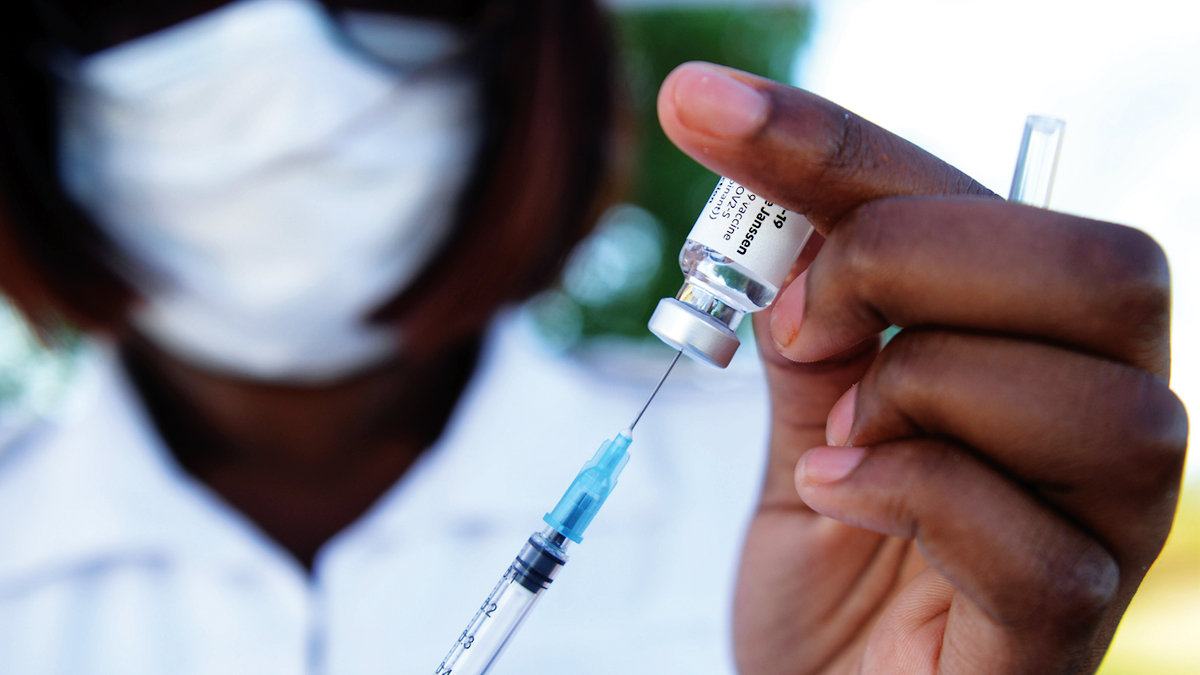
Asked if the current immunization program has extended to Botswana’s indigenous people, he responded in the affirmative. According to the MOH mouthpiece, vaccination has covered the four ends of this country.
He said: “indeed the ministry extended COVID-19 vaccination to all people in Botswana regardless of location in the country, identity, and citizenship. As a result of this all-inclusive approach, more than 70% of the country’s population has so far received at least one dose of COVID-19 vaccines.”
Seeking to enquire on how these communities which are both socially and economically disadvantaged have been reached out to since the advent of COVID-19, Nyanga noted that the ministry has been aggressive in public health campaigns.
“As a result, the vaccination progress has been largely successful in all areas across the country, with an average of more than 70% in every village, town and city, including hard to reach areas like the CKGR in the Ghanzi district,” he added.
At this point, Nyanga, reiterated that, contrary to popular belief, the ministry has not left anyone behind in the fight against COVID-19.
But to answer the question of how the government provides health care services to those in remote areas, he further said there are enough resources to reach all areas including those with limited developments.
Moreover, he added that “In places like the CKGR in the Ghanzi DHMT, the ministry regularly visit with mobile clinics and also with helicopters, to serve the people living in the reserve.”
To their defence, the MOH stated that most far away rural areas have health posts but in instances there are no health posts like CKGR, the ministry regularly visits such areas to assess the health situation and conduct primary health care services like consultations, screening for HIV, STDs, health promotion and chronic conditions management.
Economic woes
Exposing the economic hardships that indigenous people faced, ARISA stated for Botswana, they were unable to generate any source of income during lockdowns because several of them depend on casual labour which they could not find during lockdowns and movement restrictions.
“The lockdown impacted their ability to earn a living as they were unable to work on the farms due to movement restrictions,” reads the report.
According to ARISA, even though government provided food rations, there were delays and limitations of what could be provided particularly for people in remote areas. “The Botswana government also made efforts to deliver water to the remote areas in tanks, but the water was not adequate. Given that access to water is always a challenge for almost all indigenous communities, the inadequacy of deliveries during COVID-19 coupled with lack of basic needs such as soap for handwashing was, and continues to be, life threatening.”


 HENNY MARUAPULA Own Correspondent RelatedPosts The Wealth Battle ‘E-X’ GBV survivors get a voice Breast cancer awareness tour underway The Wealth Battle ‘E-X’ is a new-fangled 74-paged powerful and motivational faith-based guide that challenges the readers to rise above… Read more: The Wealth Battle ‘E-X’
 Shadi Showa, Head of Customer Experience, Access Bank Botswana As Botswana celebrates 60 years of independence, we are reminded of the values that have shaped our nation: unity, respect, dignity, and a commitment to uplifting one another. These values… Read more: BOTHO KEY TO BETTER CUSTOMER EXPERIENCE-ACCESS BANK
 71% of Botswana consumers expected their income to increase in the next 12 months 96% said access to credit and lending products is important for achieving their goals Reported digital fraud attempts declined, but the proportion of consumers who… Read more: Botswana Households Showed Resilience Amid Financial Pressure-TransUnion
 Local generation strengthens, imports drop significantly BAKANG TIRO editors@thepatriot.co.bw RelatedPosts Electricity generation jumps 56.6% Molale’s day in court P30m BPC tender row Botswana recorded high electricity generation in the second quarter of 2026 resulting in significant drop in imported… Read more: Electricity generation jumps 56.6%
 Charged with abuse of office in P1,445 billion corruption case ‘Gantsi -New Xade Road awarded to Tau Grading fraudulently’ – DPP Joins several others, including former cabinet minister Noah Salakae RelatedPosts Electricity generation jumps 56.6% Molale’s day… Read more: Molale’s day in court