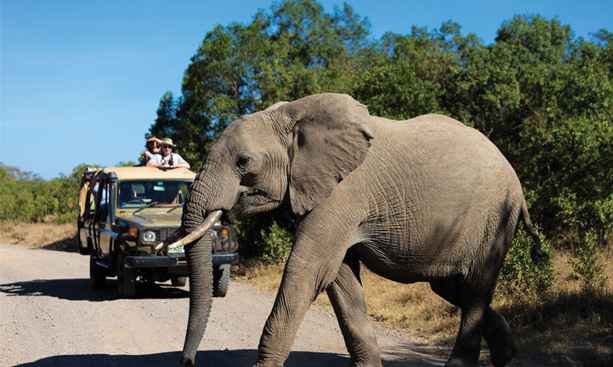
A joint research by Israel Blackie, a University of Botswana PHD candidate and Jan Sowa from the Committee of Cultural Studies, Polish Academy of Sciences, Poland on Dynamics of Social Ecology of Elephant Conservation in Botswana and Implications on Environmental Development has established that, indeed, most of the current environmental issues are in many ways, the symbolic products of man’s irrationalities rather than natural catastrophe and or deficiency in the nature’s ability to provide sustenance to human kind.
The research sought to understand the factors and causes of the escalating social and ecological elephant conservation issues in Botswana as guided by the theory of social ecology. Social ecology is based on the conviction that nearly all of our present ecological problems originate in deep-seated social problems. It follows, from this view, that these ecological problems cannot be understood, let alone solved, without a careful understanding of our existing society and the irrationalities that dominate it. The research is published in the Journal of African Interdisciplinary Studies February 2019 Vol. 3, No. 2.
Social ecology re-focuses attention on the prevailing social relations, economic and market forces which have permeated society as the main cause of the environmental problems we face instead of solely the product of natural calamity. It thus theorises that the growth of capitalism has ushered in a society in which the natural environment is reduced by man to a resource that is exploited in the market place. That negative tendency has been reinforced by globalization that has extended the impact of market mechanisms on both geographical and social levels. Thus, even though human beings are products of the ecological changes, they also actively contribute to the ecosystem processes which result in environmental issues, the study notes.
The study has established that the environmental and socio-economic challenges arising from failure by human beings to rationalize the ecological and social needs of the elephants and human beings, respectively, include mainly excessive elephant population growth. This excessive elephant population growth has further caused the following challenges currently facing both the government and local communities: increase in human wildlife conflict; increase in payment costs for compensation to wildlife damage and escalation in poaching incidents.
In their study Blackie and Sowa conclude that the presence of natural and socioeconomic issues reflects a continual ‘domination of man by man which has seemingly pitted man against the counteroffensive force of the natural environment’.They, therefore, caution that environmental issues are complex and require a multi-disciplinary focus to uncover a range of complex relationship between nature and the social environment. “Ecological research alone may not adequately offer a comprehensive account of the social issues particularly the collaborative community based participatory research orientation including economic and market factors which could be profoundly substantiated by collaborating with social researchers. There is an urgent need for collaborative studies between social and ecological researchers if their research recommendations are to be impactful and remain relevant to policy crafting. Perhaps, it is time that government and conservationists retraced back again their footsteps,” part of the research paper reads.
Citing Songorwa et al., 2000:606, the researchers conclude that the search for a “lasting solution” involves more soul-searching where the conservationists retrace their footsteps further and go back to their perceived enemies, ask for forgiveness, and propose cooperation, partnership, and the equitable sharing of the costs and benefits of wildlife.
Like others before, the study also established that the unilateral and ecologically imbued decision making such as introduction of hunting prohibition has led to a myriad of ecological and social issues needing comprehensive and urgent mitigation measures. The prohibition in wildlife hunting has led to a reduction in the rural community livelihoods, the study found. These rural livelihoods include loss of employment, loss of revenue to Community Based Organisations and loss of game meat. The hunting prohibition has also led to local communities disbanding provision of community benefits such as old age allowance; orphans allowance; disability allowance; students’ scholarships as well as community empowerment schemes. Funding for these community infrastructure and social benefits was mainly derived from revenue generated through sale of community hunting quotas including sale of wildlife by products from hunted animals. To mitigate the loss of such economic benefits the study suggests:”In order to eliminate hunting altogether, one needs to provide alternative sources of income through complex developmental policies”.
The study has also demonstrated that the human wildlife conflict has been on an exponential increase since introduction of wildlife hunting prohibition. The increase in human wildlife conflicts has been noted for negatively impacting the conservation of wildlife as well as reducing rural livelihood as the wildlife destroy people’s fields and in some instances resulted in loss of human life. At this point, the state is likely to be reduced to a social welfare state, and having to introduce social safety nets in the form of social grants to care for the poor or compensate those citizens who either have their property or life destroyed by wildlife.
According to the study the prevailing global norms as they affect national conservation policies continue to shape citizens and state relations particularly those residing in northern districts where the livelihood needs of human beings and wildlife habitat and forage particularly elephant overlap. Perhaps government should consider introducing community compensation scheme for effective management of the spiralling increase in compensation figures, the researchers propose. They observe that local communities are likely to administer the scheme efficiently as their presence on the ground could ensure rapid and thorough assessment of alleged problem animal conflict cases. This approach, the researchers say, could save government from incurring loss of funds from payment of damages particularly fraudulent cases and actual staff time spent on dealing with problem animal cases.
Background
The study adopted a critical social theory to the understanding of current complex environmental and social issues affecting the contemporary elephant conservation in Botswana. The study underscores the fact that Botswana, a developing country, finds itself caught up in a conflicting position in which meeting the dictates of global community put it against the belief and wishes of its local populace. The researchers demonstrate that such a position is an essential element of postcolonial periphery-centre dynamics within capitalist world-system. They said natural resources conservation including wildlife conservation represent a social system or mosaic whose survival is dependent on a balance of both anthropogenic and ecological sound decision making. The study established that resources rich African countries need to focus both on the global goal of protecting environment and the local one of providing the means of existence to its own population as well as national development. Mitigation measures such as compensation for property damaged by wildlife were found to be unsustainable and extending the scheme to loss of human life requires a careful analysis of the long-term implications of such a strategy on the social and ecological implications. They emphasise that collaboration between environmental disciplines such as ecology and human societal sciences such as rural sociology should be encouraged so that issues affecting natural resources conservation and understanding of the society could be addressed expertly.
About elephants
Over the years, Botswana has gradually built its wildlife biomass into one of the few countries in the world that is currently home to some of the largest continentally threatened and endangered wildlife species, particularly large herbivores such as elephants. Botswana currently holds Africa’s largest population of elephants translating to about a third (30.1%) of the entire continental elephant population. The population of Botswana’s elephants was estimated from the national Aerial Survey to be 207 545 individual elephants against an initial projected 2010 target of 60 000 individual elephants.The elephant population has increased at the rate of 5% from 154 658 to 207 545 elephants between 2006 and 2012. In Botswana, elephants occur mostly in the northern region with strong holds in Ngamiland District (61% of total elephant population) followed by Chobe District (34%) even though some relatively small elephant herds can be found in the Central District and in Northern Tuli Block.
Consequently, these large numbers of elephants have resulted in the increased environmental and socio-economic challenges to the host communities as elephants encroach into human settlements. The interface between the elephants and host communities has resulted in negative socio-economic consequences ranging from destruction of property to loss of human life. Also, the coexistence challenges have resulted in environmental degradation with key wildlife species having been decimated by farmers in retaliation. Elephants are not only blamed for destroying rural people’s livelihood but are also responsible for destroying the habitat, particularly forage, which other small wildlife species such as lechwe (letswere) depend on for their survival. An earlier study by Dr Michael Chase in 2011 concluded that an over-abundance of elephants is likely to be detrimental to the rural livelihood and possibly result in the extinction of such small wildlife species.
Study areas
The study was conducted in two districts being the Ngamiland and Chobe districts, who have the highest elephant population in Botswana. The Ngamiland district areas included Gudigwa, Sankoyo and Khwai villages all located in the fringes and adjacent to the Okavango delta and forms part of the African Rift Valley System. The three villages of Gudigwa, Sankuyo and Khwai were selected for this study because of their experience with the community based natural resources management (CBNRM) programme and are almost entirely made up of marginalised ethnic groups in the Ngamiland district.
The second phase of the study was conducted in the Chobe district villages which are part of the Chobe Enclave Conservation Trust (CECT). These villages are located in low-density rural settlements along roads skirting the wetlands in the north-west side of Chobe district along the main road joining Chobe and Ngamiland district through the Chobe National Park. The Bambukushu, Basubiya and Batawana are the majority population in most of these villages. Wildlife abounds in these areas, moving to and from the wetlands.
Even though traditional economic activities in the areas vary across ethnic groups, the majority of people depend on natural resources for their livelihoods and pastoral farming with an estimated cattle population of about 9,000 in 2013.Other activities practiced are dry and molapo (wet) farming, subsistence fishing and harvesting of thatching grass and reeds for domestic use.


 RelatedPosts BoB upbeat on the economy MPs demand Money CONTROL YOUR MAN
 RelatedPosts BoB upbeat on the economy MPs demand Money CONTROL YOUR MAN
 RelatedPosts WILDERNESS NORTHERN AIR MAINTENANCE VACANY – SAFETY MANAGER DE BEERS EXPRESSION OF INTEREST (EOI) – DE BEERS VOCATIONAL TRAINING INSTITUTE IMPLEMENTATION SUBJECT MATTER EXPERT BURS VACANCIES
 RelatedPosts WILDERNESS NORTHERN AIR MAINTENANCE VACANY – SAFETY MANAGER DE BEERS EXPRESSION OF INTEREST (EOI) – DE BEERS VOCATIONAL TRAINING INSTITUTE IMPLEMENTATION SUBJECT MATTER EXPERT BURS VACANCIES