- Local generation strengthens, imports drop significantly
BAKANG TIRO
editors@thepatriot.co.bw
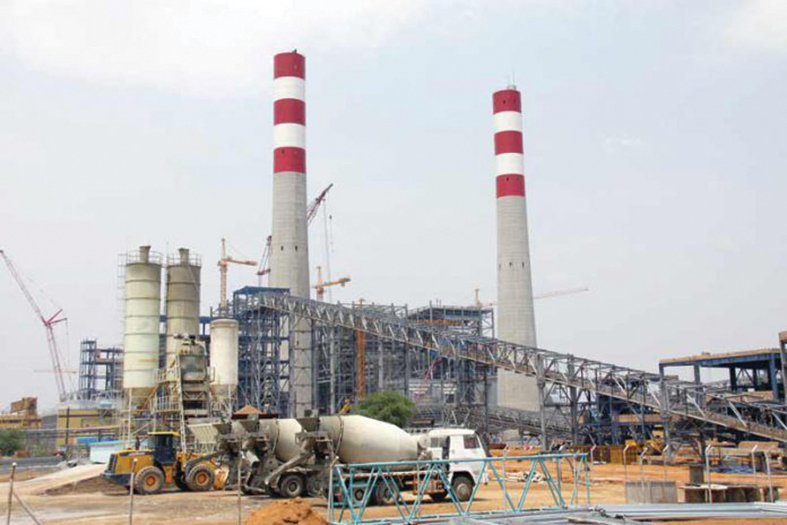
Botswana recorded high electricity generation in the second quarter of 2026 resulting in significant drop in imported electricity, a development that is strengthening the country’s energy independence.
Statistics Botswana (SB) revealed on its Electricity Generation and Distribution Stats Brief, Second Quarter 2026 that the physical volume of electricity generated increased by 56.6 percent (359,328 MWh) year-on year, from 635,194 MWh in the second quarter of 2025 to 994,522 MWh in the second quarter of 2026. SB said this represents a substantial increase in domestic electricity generation and reflects improved local generation during the period under review.
According to SB, a quarter-on-quarter basis, electricity generation increased by 10.3 percent (92,619 MWh), from 901,903 MWh in the first quarter of 2026 to 994,522 MWh in the second quarter of 2026.
It said the increase was primarily driven by higher output from Morupule A and Morupule B Power Stations, complemented by increased generation from solar power plants. “The second-quarter output was the highest level of local electricity generation recorded over the last ten years. The electricity generation mix remained dominated by Morupule A and B Power Stations, which collectively accounted for 89.9 percent (894,024 MWh) of total electricity generated during the second quarter of 2026,” said SB. The Orapa and Matshelagabedi emergency diesel power plants contributed 0.3 percent (3,136.5 MWh), while solar power stations accounted for 9.8 percent (97,361 MWh).
Economist Dr Mosimane Rammika noted that sharp rise in local electricity generation is critical for the economy and can enable Botswana to export the surplus. He indicated that that electricity imports have been gobbling lot of money resulting in government incurring high debts in some instances. He said the energy partnership that government signed last year with a consortium of international investors in a step aimed at transforming the country’s electricity sector and achieving long-term energy independence would be instrumental going forward.
Through the Ministry of Minerals and Energy, led by Bogolo Kenewendo, Botswana entered into a Strategic Partnership Agreement with Thirty-Five Global Links (TFGL), Mercuria Asia Holdings, Ulsan Holding Anonim Sirketi, and Innovation Global Industries (IGI).
Power imports
Meanwhile, SB said electricity imports dropped significantly year-on-year, indicating reduced dependence on external energy sources despite quarterly shifts. During the second quarter of 2026, the physical volume of imported electricity decreased by 59.4 percent (268,562.9 MWh), from 451, 754 MWh during the first quarter of 2025 to 183, 191.1 MWh during the quarter under review.
Moreover, the report stated that imported electricity decreased by 16.8 percent (37, 113.9 MWh) during the second quarter of 2026 (183,191.1 MWh) compared to the previous quarter, 220, 305 MWh.
The significant decline of imported electricity is directly attributable to the substantial increase in domestic electricity generation. “In addition, the utilisation of solar for electricity generation has allowed the Botswana Power Corporation (BPC) to prioritize cheaper local renewable energy over variable-priced imports from the regional suppliers,” said SB.
During the period, Eskom constituted the largest source of imported electricity, contributing 73.9 percent (135,444 MWh) of total electricity imports and was followed by cross-border electricity markets, which accounted for 15.8 percent (28,858.0 MWh), while the Southern African Power Pool (SAPP) markets contributed the smallest share at 10.3 percent (18,889.0 MWh).
Collectively, SB explained that cross-border markets and SAPP accounted for 26.1 percent (47,747 MWh) of total imports, suggesting that although alternative sources made a measurable contribution, imported electricity remained predominantly concentrated in Eskom.
According to SB, cross-border electricity markets refer to arrangements through which towns and villages located along national borders receive electricity directly from neighboring countries, including Namibia and Zambia.


 Local generation strengthens, imports drop significantly BAKANG TIRO editors@thepatriot.co.bw RelatedPosts Molale’s day in court P30m BPC tender row Khama, Govt clash Botswana recorded high electricity generation in the second quarter of 2026 resulting in significant drop in imported electricity,… Read more: Electricity generation jumps 56.6%
 Charged with abuse of office in P1,445 billion corruption case ‘Gantsi -New Xade Road awarded to Tau Grading fraudulently’ – DPP Joins several others, including former cabinet minister Noah Salakae RelatedPosts Molale’s day in court P30m BPC… Read more: Molale’s day in court
 Contractors challenge Zero-Pula Connection tender award Concerned local contractors allege corruption, kickbacks BPC deny corruption, kickbacks or misappropriation allegations BAKANG TIRO editors@thepatriot.co.bw RelatedPosts Molale’s day in court P30m BPC tender row Khama, Govt clash A group of local contractors… Read more: P30m BPC tender row
 Major shareholder BPOPF fully underwrites the proposed capital raise, demonstrating strong institutional support for Letshego’s streamlined, lower-risk growth strategy. Letshego Africa Holdings Limited has announced a proposed P800 million rights offer, representing a landmark capital raise on the Botswana… Read more: Letshego to raise P800m from the BSE
 The University of Botswana (UB), a premier state-owned tertiary institution dedicated to shaping the future through excellence, innovation, and meaningful societal impact, invites applications from accomplished and suitably qualified professionals for the following positions: RelatedPosts JOB OPPORTUNITIES AT… Read more: (no title)