- 8 percent growth in 2025 from P146.5 billion in 2024
- Customer deposits & shareholder funds backed growth
- Businesses’ debt to banks stood at P27.2 billion in 2025
BAKANG TIRO
editors@thepatriot.co.bw
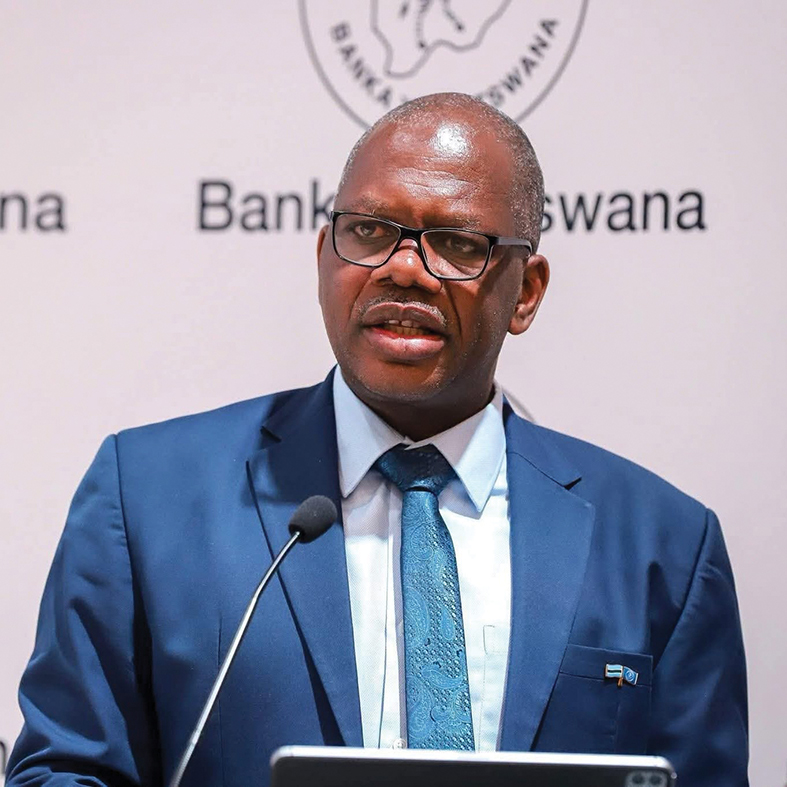
Total assets of the local commercial banks increased by 1.8 percent from P144 billion in December 2024 to P146.5 billion in December in 2025, a much slower rate of growth than 7.7 percent in 2024.
This is according to Bank of Botswana’s (BoB) Banking Supervision Annual Report 2025 which presents information on the structure, performance and general state of the banking industry, overview of the national payments system and developments pertaining to banking regulation and supervision in Botswana in 2025.
According to the report, customer deposits and shareholder funds, which grew by 3.3 percent and 15.1 percent, respectively, remained the major sources of funding for asset growth.
BoB said asset structure of commercial banks was relatively unchanged between 2024 and 2025, adding that gross loans and advances, being the largest component within the asset structure grew by 3.3 percent (2024:6.5 percent) from P87.1 billion in 2024 to P90 billion in 2025.
Meanwhile, the share of placements with other banks and credit institutions was 17.4 percent followed by investment and trading securities, at 17 percent, cash and balances with the central bank and other assets, at 3.2 percent each, BoB explained.
Overall, the central bank assessed the asset quality of the banking sector to have marginally improved, as the ratio of Non-Performing Loans (NPLs) to gross loans and advances declined from 3.4 percent in 2024 to 3.3 percent in 2025. It also made an observation that commercial banks were adequately capitalised and complied with the minimum statutory and prudential requirements in 2025.
Banks also reported capital adequacy and common equity Tier 1 capital ratios higher than the prudential minimum of 12.5 percent and 4.5 percent, respectively
Similarly, BoB said the capacity of capital to withstand losses arising from NPLs also marginally improved, as net NPLs (net of specific provisions) to unimpaired capital declined from 8.3 percent in 2024 to 7 percent in 2025. It stated that specific provisions for the banking industry increased by 11.3 percent from P1.5 billion in 2024 to P1.6 billion in 2025, resulting in an increase in the specific provisions to NPLs ratio from 49.3 percent in 2024 to 54.6 percent in 2025.
Household credit
Meanwhile, BoB established that household credit which constituted 63.3 percent of gross loans and advances of the banking industry rose by 2.6 percent, from P55.8 billion in December 2024 to P57.2 billion in December 2025.
On the other hand, credit to private businesses increased by 7.6 percent from P25.3 billion in 2024 to P27.2 billion in 2025. “Similarly, credit to public sector entities increased by 17.1 percent from P1.7 billion to P2 billion in the same period. Chart 2.8 compares the sectoral distribution of loans and advances between 2024 and 2025,” BoB said.
Furthermore, BoB in 2025 noted that large exposures10 of commercial banks were unchanged, at P26 billion, between 2024 and 2025.
According to BoB, the ratio of large exposures to unimpaired capital fell from 142.4 percent in 2024 to 132 percent in 2025, thus below the 800 percent maximum prudential limit, indicating a generally low credit concentration risk in the industry. It said the ratio varied across banks, ranging from zero to 562 percent, consistent with the pattern observed in the previous year.
“Related-party exposures increased by 22.9 percent from P733.8 million in 2024 to P901.9 million in 2025; consequently, the ratio of loans to related parties to unimpaired capital increased from 4 percent to 4.6 percent in the same period,” BoB underscored.
It added: “Although loans to related parties increased significantly, the proportion of those loans to unimpaired capital remained insignificant, indicating that insider loans were not a material source of credit risk to the banking industry.”
BoB added that unimpaired capital for commercial banks grew by 7.4 percent from P18.3 billion in 2024 to P19.7 billion in 2025 and this is despite the growth, four banks reported a fall in unimpaired capital.
Moreover, the decline in unimpaired capital at those banks was because of the decline in profit or the redemption of Tier 2 instruments in the same year.


 8 percent growth in 2025 from P146.5 billion in 2024 Customer deposits & shareholder funds backed growth Businesses’ debt to banks stood at P27.2 billion in 2025 BAKANG TIRO editors@thepatriot.co.bw RelatedPosts RDC Properties posts strong H1 results BOTHO KEY… Read more: Banks’ total assets rise to P144 billion

 ‘Resign or wed same sex couples” – Marriage Officers told ‘Court doesn’t have power to permit same-sex marriages’ – Chilisa Bonolo, Tsholofelo continue marriage equality battle PALEMA KGAKATSI & BAKWADI LEKOPANE RelatedPosts Govt rejects same sex marriages Dingwetsi, Church… Read more: Govt rejects same sex marriages Dingwetsi, Church angry

 “(Manual Workers Union) says it is only its own participation, as a member, that can save the constitution (of the Public Service Bargaining Council). I think in this the applicant is punching way above its weight, and arrogating to… Read more: Manual workers defeated

 PALEMA KGAKATSI editors@thepatriot.co.bw RelatedPosts Govt rejects same sex marriages Dingwetsi, Church angry Manual workers defeated SADC law conference tackles democracy, regional integration The University of Botswana hosted the 5th SADC International Law Conference from 7–9 October 2026 under the… Read more: SADC law conference tackles democracy, regional integration

 Job Description: Head of Production in Fashion, will be responsible for planning, coordination and control of manufacturing processes. Making sure goods and are produced efficiently. Correct amount is produced at the right cost and level of quality. Product design… Read more: HEAD OF PRODUCTION – FASHION