
BY: NONOFO LEBANG
In three rural villages, a new vision for community development is taking root. Through indigenous tree nurseries, three women are helping connect environmental restoration with income-generating opportunities and a more sustainable future.
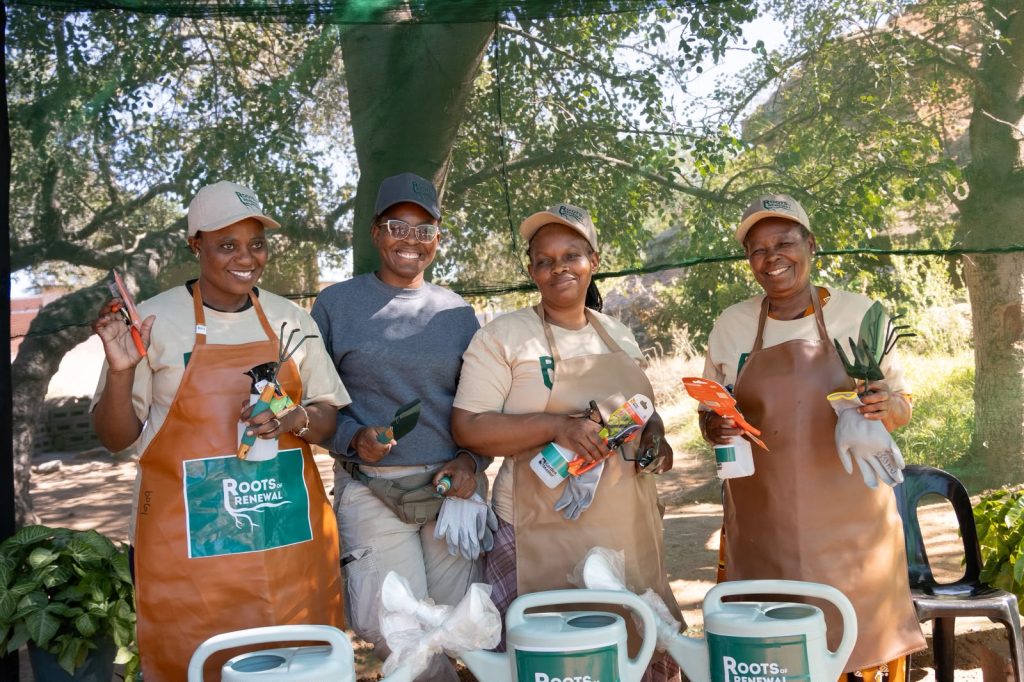
Marea Kwapa of Lentswe-le-moriti, Elisa Mokgadi Aphiri of Mathathane and Lady Nyamakonde of Motlhabaneng are at the centre of the Roots of Renewal project, an initiative demonstrating how restoring degraded land can also create opportunities for women’s economic empowerment.
Implemented by Terra Conservancy Operations (Pty) Ltd, the Roots of Renewal—Molema Land Rehabilitation Project—has established three greenhouse nurseries in the participating villages, with sponsorship support from Okavango Diamond Company (ODC).
The initiative places rural women at the heart of a practical approach to conservation, recognising their potential not only as environmental stewards but also as producers, suppliers and entrepreneurs.
For Marea, Elisa and Lady, the nurseries provide a platform to develop practical skills in indigenous tree production while contributing to the rehabilitation of their surrounding landscapes.
GROWING MORE THAN TREES
Roots of Renewal is built on the understanding that land rehabilitation can create economic opportunities when local communities participate in producing the resources required.
Indigenous trees can support biodiversity, protect soil and contribute to the recovery of degraded landscapes. Successful rehabilitation, however, requires suitable seedlings, skilled growers, careful planting and continued maintenance.
This creates opportunities for rural communities to supply trees and related services to conservation programmes, private companies and other organisations undertaking environmental restoration.
The project has identified a plan to purchase 1,500 trees from participating women. The financial value of this planned purchase should be confirmed against the agreed price per tree before publication.
By connecting tree production to potential market demand, Roots of Renewal aims to create a pathway through which conservation activities can support local enterprise and income generation.
For the three women, the longer-term opportunity is to strengthen their productive capacity, develop business experience and participate in a model that could eventually benefit more women in other communities.
WOMEN AT THE CENTRE OF RURAL ENTERPRISE
The emerging green economy is often associated with renewable energy, climate finance and major infrastructure investments. Yet rural communities can also participate through indigenous tree production, land restoration and sustainable natural resource management.
Under a woman-led model, a nursery can become more than a place where seedlings grow. It can develop into a small rural enterprise, creating opportunities to supply trees, build business skills and retain more economic value within the community.
With appropriate investment and access to buyers, the wider value chain could also create opportunities in seed collection, seedling transport, planting, maintenance and environmental education.
For these enterprises to become sustainable, women need access to technical training, reliable markets, fair purchasing arrangements and business management skills. Understanding production costs, calculating profit margins and keeping accurate records will be essential to turning nursery operations into viable businesses.
Roots of Renewal therefore offers an opportunity to connect environmental restoration with practical economic empowerment, helping women become active participants in the activities their communities need.
RESTORING THE LAND, STRENGTHENING COMMUNITIES
The success of the project will depend on more than the number of seedlings produced. Trees must be suited to local conditions and protected after planting to improve their chances of survival.
Water availability, soil conditions, pests and damage from animals can affect nursery operations and rehabilitation outcomes. Continued technical support and monitoring will therefore be essential.
Tracking tree survival, the area of land restored and the number of seedlings supplied will help demonstrate the project’s environmental impact. Equally important will be measuring income earned by participating women, sales completed, skills developed and enterprises sustained.
The project’s expansion vision includes increasing participation beyond the initial three women, with plans identifying the potential to involve 15 women and, in a later phase, 30 women.
These are growth ambitions rather than completed outcomes. Achieving them will require adequate infrastructure, appropriate technical support, reliable markets and careful planning.
If these foundations are established, the initiative could provide a model for other rural communities seeking to combine conservation with enterprise development.
PARTNERSHIPS THAT CREATE LASTING VALUE
The support of Okavango Diamond Company has helped provide a foundation for Roots of Renewal, while Terra Conservancy Operations (Pty) Ltd implements the initiative.
Such partnerships demonstrate how corporate support can contribute to environmental rehabilitation while helping communities build productive capacity.
Companies, government institutions, conservation organisations and private landowners could strengthen this approach by creating fair procurement opportunities for indigenous trees and supporting rural suppliers.
Reliable purchasing arrangements would give women greater confidence to plan production, manage costs and consider expanding their businesses.
For Botswana, the wider lesson is that environmental protection and economic empowerment need not be separate objectives. When communities participate directly in restoration, conservation investment can also create opportunities for local enterprise.
THREE WOMEN, ONE GROWING VISION
Marea Kwapa, Elisa Mokgadi Aphiri and Lady Nyamakonde represent the human dimension of a development approach that brings together environmental responsibility and women’s economic participation.
The long-term impact of Roots of Renewal will be measured not only by the trees planted, but also by the livelihoods strengthened, the businesses sustained and the opportunities created for other rural women.
Their story challenges the idea that rural communities should be viewed only as recipients of development support. With the right partnerships, skills and market access, women can become active contributors to environmental restoration and economic growth.
As Botswana explores more inclusive approaches to sustainable development, Roots of Renewal offers a promising starting point: three women, three village nurseries and a shared opportunity to turn environmental stewardship into productive enterprise.
EDITOR’S PULL-QUOTE
“The future of Botswana’s green economy must include the rural women who are restoring the land, growing indigenous trees and building new pathways to economic independence.”
Through Roots of Renewal, that future is beginning to take shape—one seedling at a time.