
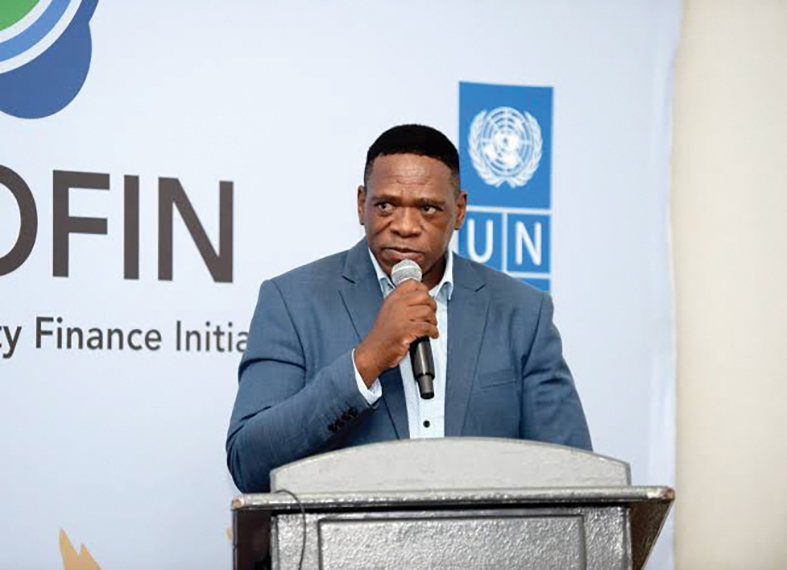
SOLOMON TJINYEKA
editors@thepatriot.co.bw
The Department of Wildlife and National Parks (DWNP) is anticipating an increase in human-wildlife conflicts in the coming months as Botswana braces for the effects of the El Niño phenomenon, which is associated with drought conditions in Southern Africa.
The department says drying waterholes and rivers could force more wild animals into human settlements in search of water, increasing the risk of property damage, crop destruction and dangerous encounters between people and wildlife. Elephants are among the species expected to venture into settlements and ploughing fields in search of water and food.
Deputy Director of DWNP, Dimakatso Ntshebe, said El Niño in Southern Africa is associated with drought, which could have significant impacts on wildlife populations. He also warned of possible elephant and hippopotamus deaths linked to an anthrax outbreak in the Chobe region. He said drought conditions could leave animals weakened and more vulnerable to the disease, which also affects buffaloes.
The department is working to mitigate the anticipated impacts by rehabilitating and equipping boreholes in protected areas to ensure wildlife has access to water during the drought period. “We will also resuscitate boreholes located along wildlife migration routes, as more animals will be moving out of national parks in search of food and water outside protected areas,” said Ntshebe, adding that the department was working with other stakeholders, including concession owners and conservation organisations, to drill additional boreholes for wildlife.
“Our aim during this El Niño is to avail more water in protected areas and along migration routes for wildlife,” he said.
Regarding the anthrax outbreak, Ntshebe said the department had procured equipment to contain the disease and prevent it from spreading to other areas. He cautioned members of the public against approaching, handling or consuming meat from sick or dead wild animals, warning that they could be infected with anthrax.
Ntshebe also urged parents and guardians to warn children against playing with weak or sick wild animals, particularly hippos, which can remain dangerous and attack despite appearing weak.
Meanwhile, the department is considering the possibility of increasing hunting quotas for the next season for selected species whose quotas are not intended for export. Ntshebe said the proposal followed public concerns that drought could lead to increased wildlife deaths, with some suggesting that hunting quotas should be increased rather than allowing animals to die from drought-related conditions. He said the department would consider the proposal, particularly for non-exportable species.
Exploring water solutions
Meanwhile, some community trusts in Ngamiland are exploring measures to protect wildlife from the potential impacts of El Niño amid concerns over rising temperatures and possible water shortages. The newly established Our Desert Valley Community Trust, which represents Chukumuchu, Xaudum and Ghani, plans to drill boreholes to provide water for elephants in its area.
Its Chairman, Ezekiel Katjimune said the trust would engage local communities to identify measures to protect elephants from the effects of changing temperatures and possible water shortages. He said the DWNP had advised them to support government efforts to mitigate the potential impacts of El Niño on wildlife. He said the planned boreholes were part of the trust’s efforts to explore community-led solutions to wildlife conservation and climate-related challenges in the Okavango region. The proposed interventions come as wildlife authorities and community conservation organisations prepare for the possible effects of drought on wildlife, natural water sources and human-wildlife relations.